
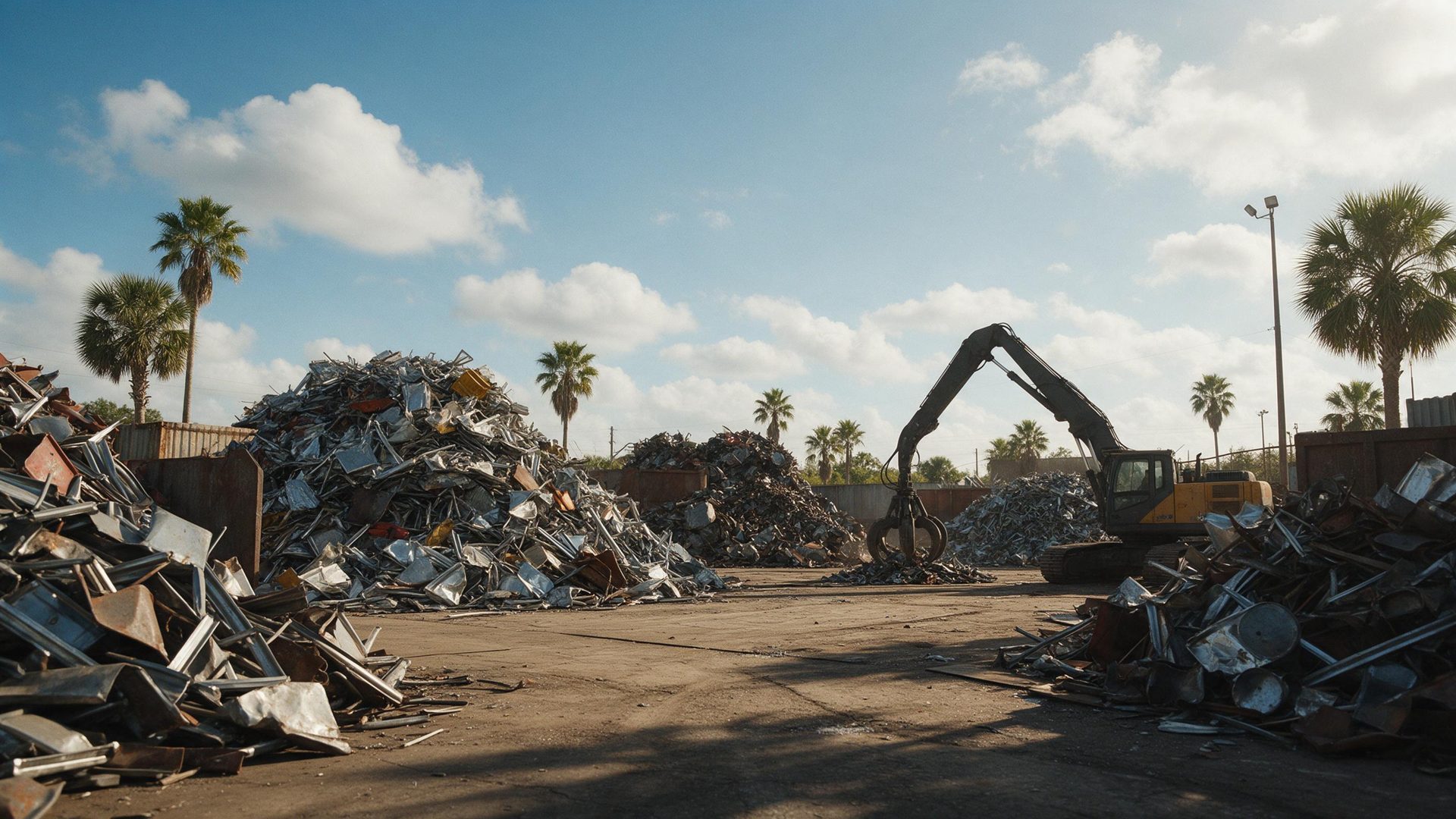
Lutz scrap is a shop behind the house more than a subdivision cutoff
Lutz lots often include a shed or a small shop. The metal is offcuts, an old trailer, gate steel, and a condenser that failed under the oaks. Volume varies wildly. A photo from the driveway, showing the whole pile, is the only useful description.
Some of these drives are long and soft after summer rain. If a heavy truck will rut the yard, say that before anyone schedules a rollback for a single car.
Local prices vary by yard. Send a photo for a quote. We do not publish a Lutz scale sheet.
Contractor scrap form · Gold and silver · Cash for cars
Sorting scrap metal in Lutz before asking for a quote
A magnet is a quick first check. If it sticks, the piece is usually ferrous, such as iron or steel. If it does not, it may be copper, brass, or aluminum, but the test does not identify the exact alloy or grade. Stainless steel can behave differently from ordinary steel, so keep uncertain pieces separate rather than relying on the magnet alone.
Keep copper separated by condition. Bare bright is clean, uncoated copper wire; #1 copper is generally clean copper pipe or solid pieces; #2 may include solder, paint, or other contamination. Insulated wire is graded separately. Yard rules vary, so a clear photo and a note about insulation or fittings can help a yard assess what is in the load.
Separate brass fittings from copper, and keep aluminum cans, sheet, cast pieces, and extrusions apart when practical. Dirt, attached plastic, steel screws, or other material can affect how a load is sorted and graded. Do not spend hours removing every attachment before asking. Check whether the extra labor is worthwhile under the partner yard's grading rules.
Lutz pickup details for appliances, vehicles, and mixed loads
Do not cut refrigerant lines or dismantle a refrigerator, freezer, or air conditioner to make it easier to move. Appliances with refrigerant need proper recovery and handling. Ask the yard whether it accepts the appliance intact and what preparation it expects. Remove loose items only when safe, and mention missing parts or refrigerant concerns before arranging transport.
For a junk car, ask about title and paperwork before setting a pickup time. Requirements can depend on the vehicle and the yard. Have the title, your identification, keys if available, and the vehicle details ready to discuss. A catalytic converter may be treated separately, and yards may require identification or paperwork to document it; do not assume it can be sold without questions.
The site connects sellers with independent partner yards; it does not buy scrap or issue a scale ticket. Before pickup, ask who is arranging the truck, what items are included, and whether the yard needs anything beyond the information you already sent. The partner yard handles weighing, payment, and any required identification. Keep people clear of loading equipment and do not climb onto unstable piles.
Questions
Should I strip insulation from copper wire before I send a photo?
Not automatically. Stripping takes time, and the yard may value insulated wire by its own category and grading rules. Ask how it wants the wire presented and compare that with the labor needed to strip it. Do not burn insulation; burning can create harmful fumes and damage the copper.
Does a magnet tell me whether a piece is worth sorting?
It helps separate many steel and iron items from non-ferrous metal, but it does not determine the exact grade or value. Some stainless steel may not attract a magnet strongly. Use the test as a rough sorting step, then describe uncertain pieces or photograph them for the partner yard.
Can I include an old refrigerator with my scrap metal?
Ask the yard first. Refrigerators and similar appliances can contain refrigerant that must be handled properly, so do not cut lines or remove components yourself. Tell the yard what appliance it is and whether it is complete. It can explain whether it accepts the item and what preparation is needed.
What should I ask before a junk car is picked up?
Confirm what title or other paperwork the yard requires, whether identification is needed, and whether keys must be available. Describe the vehicle accurately, including whether it is complete and accessible. Ask who handles pickup and payment, and whether a catalytic converter or other parts require separate documentation.
Why might a mixed load be graded differently from clean metal?
Metal attached to dirt, plastic, insulation, or other materials takes additional sorting and may fit a different grade. Yards set their own categories and acceptance rules. Separating obvious materials can make the load easier to assess, but ask before doing substantial dismantling or removing components.