
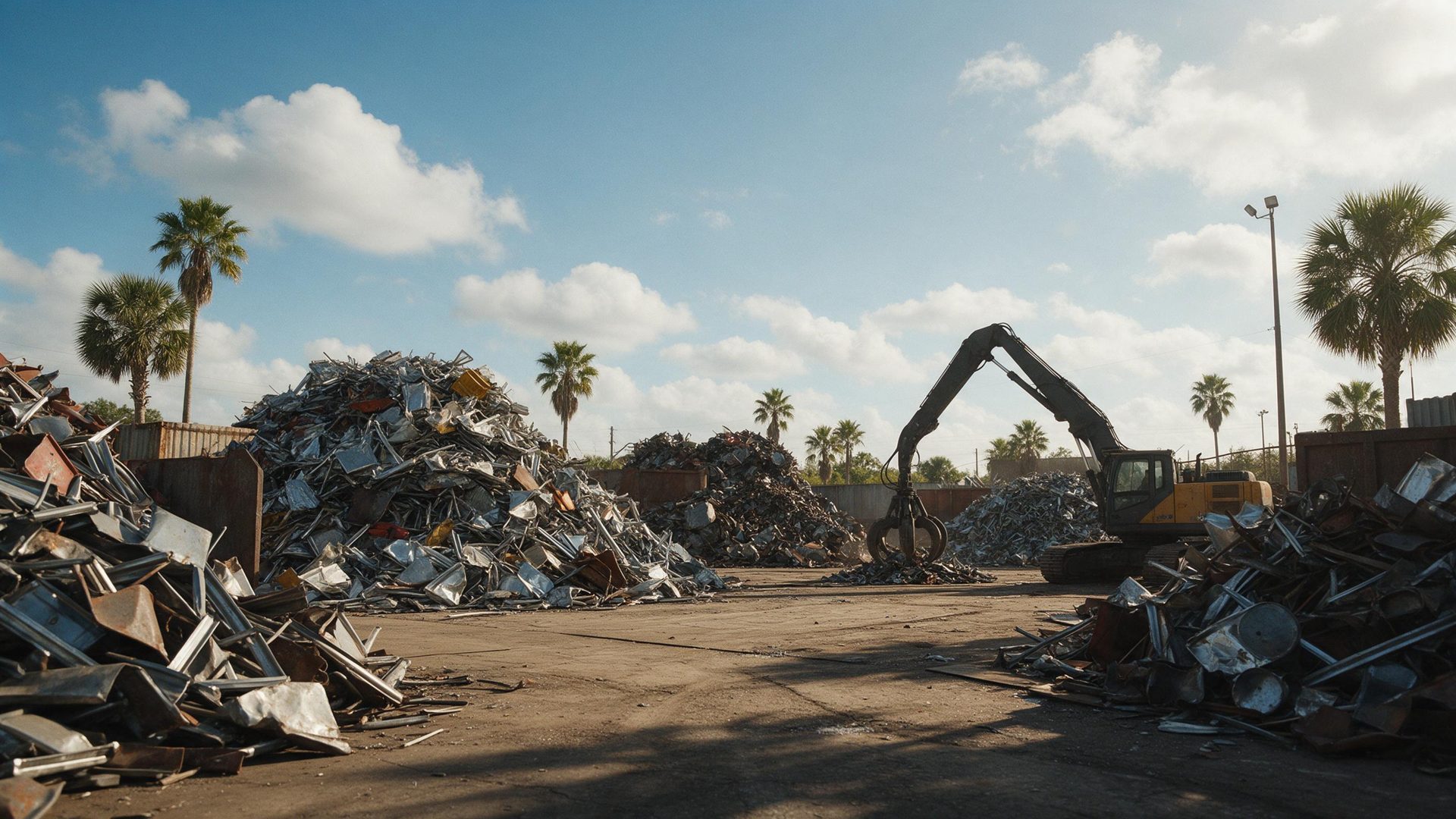
Palm Harbor is established Pinellas, with salt still in the wind
Palm Harbor’s neighborhoods are largely built. Scrap is replacement metal: condensers, aluminum fascia and cages, and copper from kitchens in houses that have already been renovated once. Piles are moderate and usually already in the garage because lots are tidy.
Condos and townhomes near the north end add elevator and parking-rules problems for appliance pulls and junk cars. Name the community rules if a vehicle has to be out by a stated morning.
Local prices vary by yard. Send a photo for a quote. We do not publish a Palm Harbor scale sheet.
Contractor scrap form · Gold and silver · Cash for cars
Sorting Palm Harbor scrap before you request a quote
A magnet is a quick first check, not a complete grade test. Steel and iron usually attract one; copper, brass, and aluminum usually do not. Some stainless steel is weakly magnetic or nonmagnetic, so do not identify it by magnet alone. Keep magnetic and nonmagnetic material in separate piles when practical, and describe anything uncertain rather than guessing its grade.
Copper wire can fall into different grades. Clean, uncoated bare bright copper is different from #1 or #2 copper, which may have coatings, solder, or other contamination. Insulated wire is usually evaluated with its insulation still on. Stripping it can take substantial time and create sharp waste; ask the receiving yard whether the expected grade change is worth the work before stripping a large amount.
Brass fittings and aluminum pieces also vary with attachments and contamination. A clean aluminum extrusion is not necessarily treated like a painted, steel-attached, or mixed piece. Remove loose nonmetal when it is safe to do so, but do not spend time dismantling material without checking how the yard classifies it. Keep separate grades apart so one dirty item does not obscure what is in the rest of the load.
Palm Harbor scrap pickups, appliances, and vehicle details
Before arranging an appliance pickup, check whether it contains refrigerant. Refrigerant must be properly recovered with suitable equipment; do not cut refrigerant lines or puncture a compressor to make an appliance easier to move. Ask the receiving yard or pickup provider whether it accepts the appliance and what preparation is required. Unplug it, clear a path, and leave heavy or awkward lifting to people with appropriate equipment.
For a scrap pickup, have a clear description of each item, approximate dimensions, and photos that show the whole load and any difficult access. Mention stairs, narrow gates, or parking restrictions before a vehicle is dispatched. Keep scrap separate from household waste, and do not block walkways. Wear sturdy shoes and gloves when handling loose metal; sharp edges, unstable stacks, and hidden fasteners can cause injuries.
A junk car is handled differently from loose metal. Ask the receiving yard what ownership documents it requires before scheduling removal; title requirements and acceptable alternatives can depend on the situation. Catalytic converters may require identification or other paperwork, so do not remove one first and assume it can be sold without questions. This site connects sellers with independent partner yards; the yard handles acceptance, weighing, payment, and any ID or paperwork checks.
Questions
How should I describe copper when requesting a quote?
Separate bare copper, coated or soldered copper, and insulated wire if you can identify them. Include close-up photos of the material and note attached fittings or residue. A photo can help a yard assess what it may accept, but the final grade is determined at the yard after inspection and weighing.
Should I remove insulation from copper wire before bringing it in?
Not automatically. Stripping takes time and leaves sharp insulation scraps, and the yard may value insulated wire as its own category. Ask the receiving yard how it grades the wire and whether stripping makes sense for that particular load. Use proper tools and eye protection if you choose to strip it.
Can I put a refrigerator or air conditioner in a scrap load?
Ask first and identify the appliance. Units with refrigerant need proper recovery, and not every yard or pickup arrangement accepts them in the same condition. Do not cut lines or remove refrigerant yourself. The receiving yard can explain whether it accepts the item and what preparation or handling is required.
What should I check before arranging removal of a junk car?
Confirm which ownership documents the receiving yard needs, whether the vehicle can be reached by a hauler, and whether keys or other details are requested. Requirements can vary with the vehicle and ownership situation. Ask about catalytic-converter identification or paperwork before removing any parts, and describe missing components when requesting a quote.
Does this site buy or weigh my scrap in Palm Harbor?
No. The site connects sellers with independent partner yards and does not buy scrap itself. The yard decides what it accepts, determines the grade and weight, and handles payment and any required ID checks. There is no published Palm Harbor scale sheet; ask the yard about its current requirements and terms.