
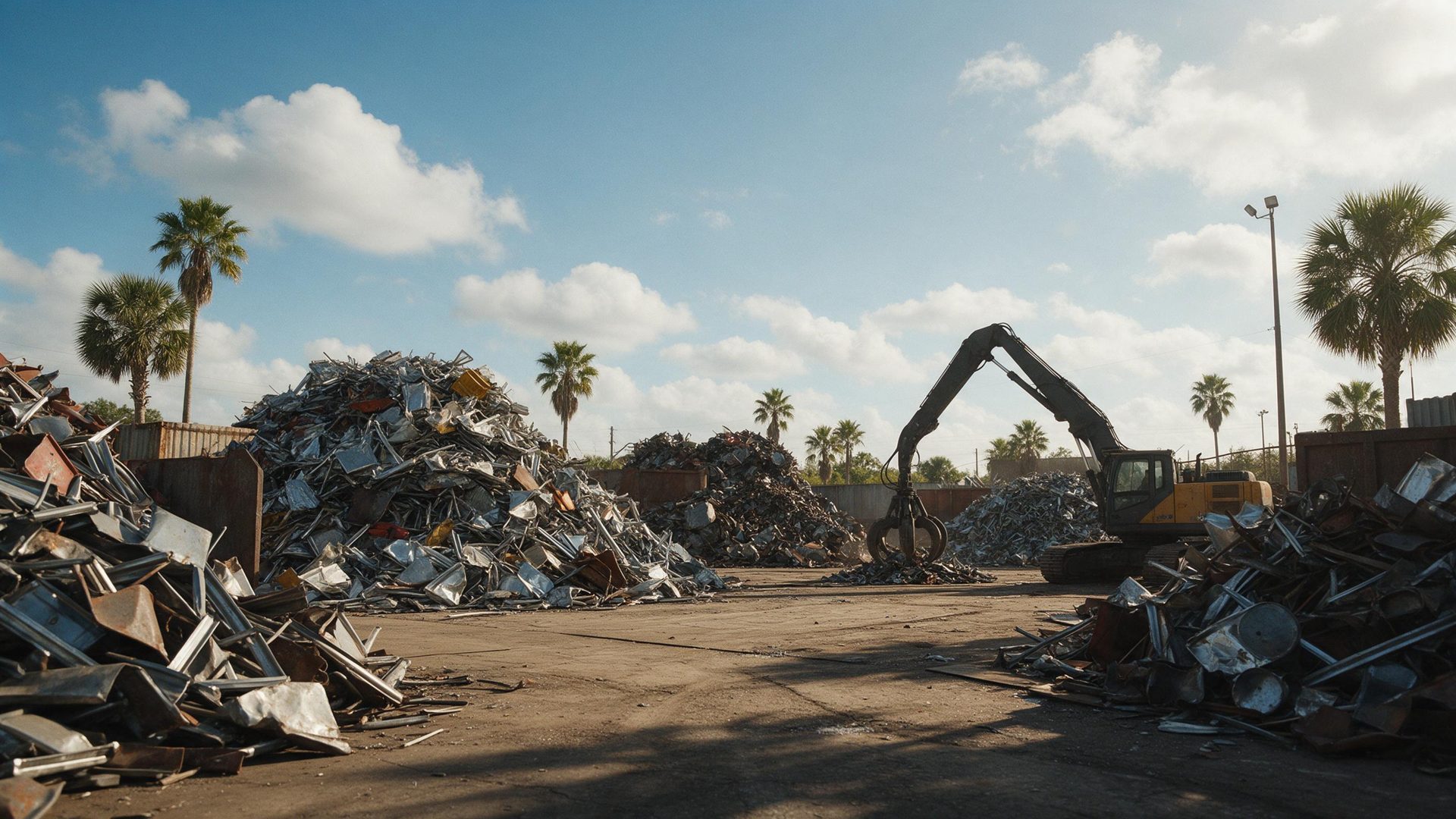
St. Petersburg metal comes out of bungalows and off salt-eaten aluminum
St. Petersburg’s older blocks — from the neighborhoods just off Central to the water-adjacent streets — remodel in inches. Copper, old galvanized mixed with brass, and aluminum windows come out of houses that do not have a side yard big enough for a roll-off. Access is the job.
Salt air writes the other list: screen cages, fascia, and dock-adjacent aluminum that finally failed. After a storm those piles multiply. Keep them separate from any copper you pulled indoors, and say if the street still has debris that would block a truck.
Local prices vary by yard. Send a photo for a quote. We do not publish a St. Petersburg scale sheet.
Contractor scrap form · Gold and silver · Cash for cars
Sorting St. Petersburg scrap before a quote
A magnet is a quick first check, not a complete grade test. If it sticks, the piece is usually ferrous steel or iron; if it does not, it may be copper, brass, or aluminum. Some stainless steel is weakly magnetic or not magnetic, so do not rely on the test alone. Keep obvious steel separate from non-ferrous metal and describe uncertain pieces when you send photos.
Copper grades can change how a yard evaluates a load. Clean, uncoated bare bright copper is different from #1 copper with some clean fittings or coatings, and #2 copper may have more solder, oxidation, or attached material. Insulated wire is commonly evaluated separately. Removing insulation can take time and may create a mess; ask the yard how it handles wire before stripping it, and never burn insulation.
Keep brass fittings apart from steel and copper where practical. Aluminum also comes in different forms, including clean siding or sheet, cast pieces, and material with steel or plastic attached. Dirt, screws, glass, insulation, and other contamination can affect how a load is classified. A photo of each separate pile and a note about attached material can help a partner yard give a more useful estimate.
Preparing St. Petersburg scrap for pickup
Before arranging a pickup, gather the material in a place a vehicle can reach, while keeping walkways and access clear. Mention stairs, narrow gates, loose debris, or anything that may prevent safe loading. Keep sharp sheet edges and protruding wire contained. Do not climb onto unstable piles or handle unknown containers; separate materials only when it is safe to do so.
Refrigerators, freezers, air conditioners, and other equipment containing refrigerant need proper evacuation before scrap processing. Do not cut refrigerant lines or release the contents yourself. Ask the yard or a qualified service provider what preparation is required and whether the equipment can be accepted as-is. Remove loose contents, but leave sealed components intact until you receive safe handling instructions.
For a junk car or catalytic converter, ask in advance what documentation and identification the receiving yard requires. Title requirements can depend on the vehicle and the yard’s process, so confirm the exact paperwork before scheduling. Catalytic converters may also require proof of ownership or other ID. Bay Area Quotes connects sellers with independent partner yards; the yard handles inspection, weighing, paperwork, and payment.
Questions
How should I photograph scrap metal for a St. Petersburg quote?
Take clear photos in good light, with each material type in its own image if possible. Include a wider view that shows the load’s size and any access limits, then close-ups of coatings, attachments, or contamination. Photos help a partner yard assess the material, but the final grade is determined when it is inspected.
Should I strip insulation from copper wire before pickup?
Not automatically. Stripping takes time and can damage or contaminate the copper if done poorly. Yards may evaluate insulated wire separately from clean copper, and their handling differs. Ask the partner yard how it accepts the wire before doing extra work. Do not burn insulation; fumes and residue can be hazardous.
Can an appliance with refrigerant be included with other scrap?
Ask before putting it in the load. Refrigerators, freezers, and cooling equipment may need refrigerant evacuated by an appropriate service provider before a yard can process them. Do not cut lines or vent refrigerant. A yard can explain its acceptance requirements and whether separate handling or preparation is needed.
What should I have ready for a junk car pickup?
Have the vehicle’s location, condition, and available ownership documents ready when requesting a quote. Ask the receiving yard which title or other paperwork it needs, and confirm whether the vehicle can be reached by its hauler. Remove personal belongings and tell the yard about missing parts or access obstacles before scheduling.
Does Bay Area Quotes buy or weigh the scrap itself?
No. Bay Area Quotes connects sellers with independent partner yards and does not buy scrap or issue a scale ticket. The yard evaluates and weighs accepted material, handles any required identification or paperwork, and arranges payment. Confirm those details directly with the yard before pickup, since acceptance and procedures can vary.