
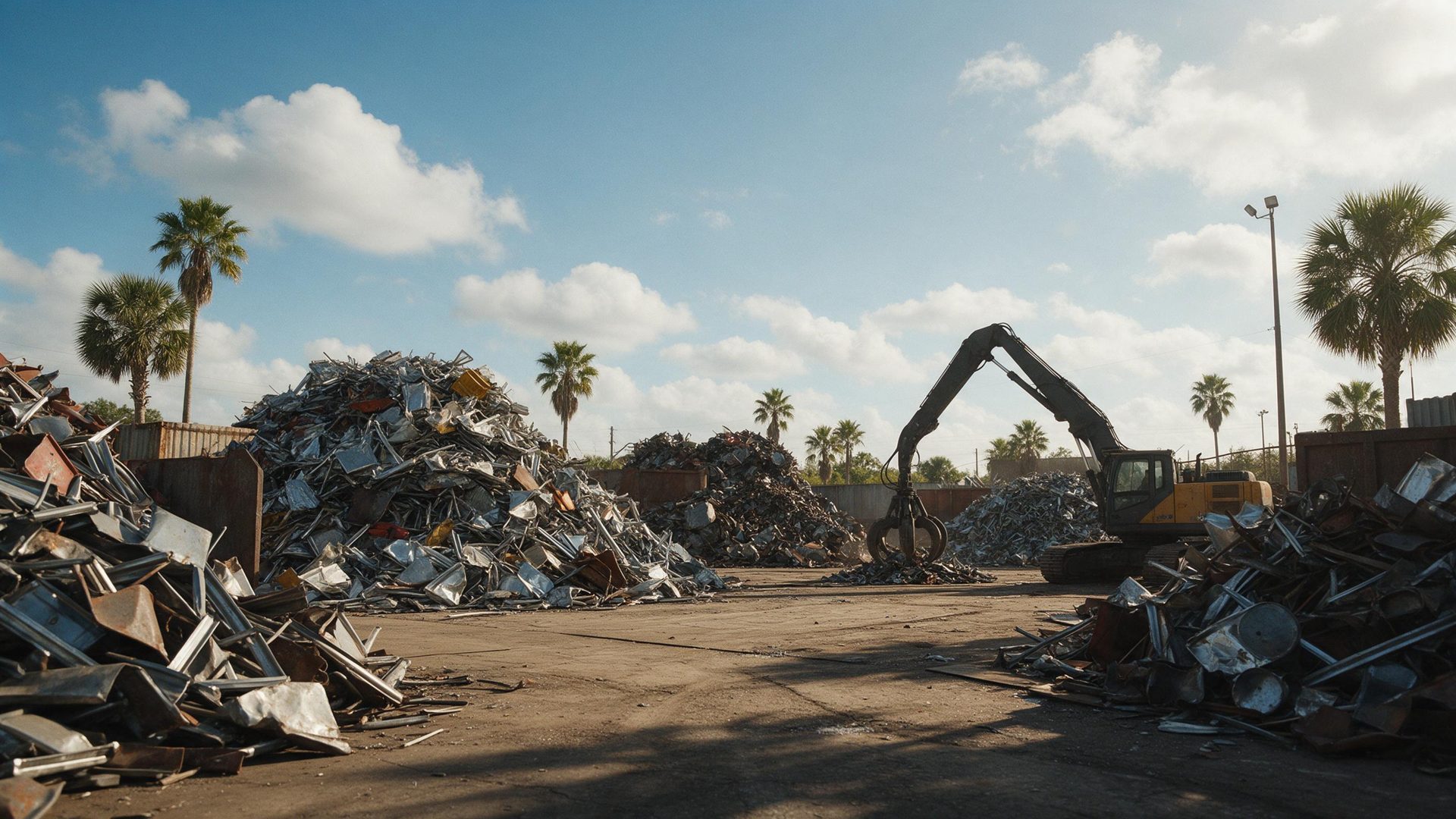
Wesley Chapel metal is almost all from houses that just went up
Wesley Chapel does not have an old industrial core to scrap. The metal is new-home cutoffs around Wiregrass and the subdivisions off the interstate, plus condensers and a junk SUV in a three-car garage. HOA gates are common.
Distance from central Tampa matters for a small load. Photograph how much you really have. A street-wide builder pile is worth a route. A single empty AC cabinet may not be.
Local prices vary by yard. Send a photo for a quote. We do not publish a Wesley Chapel scale sheet.
Contractor scrap form · Gold and silver · Cash for cars
Sorting scrap metal in Wesley Chapel before a quote
A magnet is a quick first check, not a grade test. If it sticks, the piece is usually ferrous, such as steel or iron; if it does not, it may be aluminum, copper, brass, or another metal. Keep magnetic and non-magnetic material in separate piles. A mixed load can take longer to assess, and a non-magnetic result alone does not identify the metal or its value.
Copper wire is not all the same grade. Clean, uncoated bare bright copper is different from #1 and #2 copper, which can have coatings, solder, or other contamination. Insulated wire is usually assessed with its insulation on unless the buyer says otherwise. Stripping can improve separation, but labor, tools, and the amount of insulation matter. Ask the yard how it wants wire prepared before spending time on it.
Brass fittings and aluminum parts can lose value when attached to steel, plastic, rubber, or excess dirt. Separate clean material from mixed or dirty pieces where practical, and do not guess that every light-colored metal is aluminum. Take clear photos of the piles and any unusual pieces. This helps an independent partner yard understand what you are offering before discussing whether a pickup or drop-off makes sense.
Wesley Chapel appliance and junk-car scrap details
Air conditioners, refrigerators, and other cooling appliances may contain refrigerant. Do not cut lines or remove compressors to make a pile easier to handle. Refrigerant needs proper recovery by qualified people using suitable equipment. Ask the receiving yard what appliances it accepts and whether it arranges handling. An appliance with its cooling system intact may be treated differently from clean, separated metal, so describe its condition accurately.
Catalytic converters are not ordinary mixed scrap. Keep them attached to the vehicle until you have confirmed the buyer’s requirements. Buyers may request identification and paperwork to verify the transaction and the part’s source. For a junk car, ask in advance what title or other ownership documents are required, whether keys are needed, and whether the vehicle must be accessible to a tow truck. Requirements can vary by buyer and situation.
For a pickup request, gather the vehicle location, access details, photos, and a short inventory of loose metal. Mention gates, tight turns, low clearance, or whether material is behind other items; do not assume a truck can enter or load from a particular spot. Keep people clear of sharp edges and unstable piles. This site connects sellers with independent partner yards; the yard handles weighing, payment, and any required ID.
Questions
Can I get a quote from a photo if I do not know the metal grade?
Yes. Send a few well-lit photos that show the full pile and close-ups of markings, wire insulation, or attached materials. Include approximate dimensions or quantities if you can. A photo can help a partner yard decide what questions to ask, but it cannot replace inspection or a scale ticket. Do not treat an estimate as a guaranteed payment.
Should I strip insulation from copper wire before selling it?
Not automatically. Stripping may separate the copper, but it takes time and can be difficult with small or mixed wire. Some yards accept insulated wire and grade it by type. Ask the intended buyer what it accepts and how it classifies the material before stripping. Never burn insulation; burning can create hazardous fumes and leave contaminated metal.
Can a yard take an old air conditioner or refrigerator as scrap?
Acceptance depends on the yard and the appliance’s condition. These units can contain refrigerant, so do not puncture tubing, cut lines, or remove components yourself. Tell the yard what kind of appliance you have and whether it is intact. Ask whether it accepts the unit and how refrigerant recovery is handled before arranging transport.
What paperwork should I have for a junk car in Wesley Chapel?
Ask the specific buyer what proof of ownership it requires before scheduling. Title requirements can depend on the vehicle and transaction, and the yard may request identification or other documents. Have the vehicle details and document information ready when you ask. Do not assume that a car can be collected or paid for without the required paperwork.
How is scrap weighed and paid after a referral?
This site connects sellers with independent partner yards and does not buy scrap itself. The receiving yard confirms its acceptance, weighs the material, and handles payment and any required identification. Ask that yard how the scale ticket is calculated, whether deductions apply for contamination, and what payment methods it offers. Local prices and grading decisions vary by yard.